Camping trailers that tow behind a UTV, Subaru, or truck
Yes, a UTV can tow a real camping trailer. What it takes: dry weight, tongue weight, track width, and suspension built to survive the trail behind a side-by-side.
A true sub-1,000 lb overland trailer is rarer than the search results suggest. As of 2026, fewer than a dozen trailers from US builders publish a dry weight under 1,000 lb, ranging from a 500 lb bare tent platform at $10,495 to a 900 lb camp trailer at $26,649 that ships fully outfitted. Most of the big names people cross-shop — all good trailers, and we name them below — simply sit in a heavier class.
Every weight and price in this comparison comes from the manufacturer's own published specs, checked August 2026. Where a builder doesn't publish a number, they're left out rather than guessed at.
One thousand pounds is the line where an overland trailer stops dictating what tows it. Under it, a Subaru, a mid-size pickup, most crossovers, and even a full-size utility UTV can pull the trailer with rating to spare. Over it, you start checking tow charts, watching tongue weight, and leaving the side-by-side at home.
This is every US-built overland trailer we could verify under 1,000 lb dry from the manufacturer's own published specs as of August 2026, lightest first. Base prices are as published; what's included at that price varies enormously, which the next section gets into.
| Trailer | Dry weight | Base price | Sleep setup |
|---|---|---|---|
| Tentrax Overlook | 500 lb | $10,495 (tent not included) | Rooftop-tent-ready platform |
| Tentrax Ascend | 600 lb | $11,995 | Padded bed + integrated tent |
| Sunnyside OffRoad Bunejug | 650 lb | $9,625 | Ground tent, sleeps 2 |
| Sunnyside OffRoad Boony Stomper | 720 lb | $12,999 | Hard-side teardrop |
| Hiker Trailer Highway Lite | 765–825 lb as built | $5,499 | Hard-side squaredrop |
| Hiker Trailer Highway Deluxe 5x8 | 800 lb | $6,299 | Hard-side squaredrop |
| SNO Trailers Recon | 875 lb | $13,995 | Rooftop-tent platform |
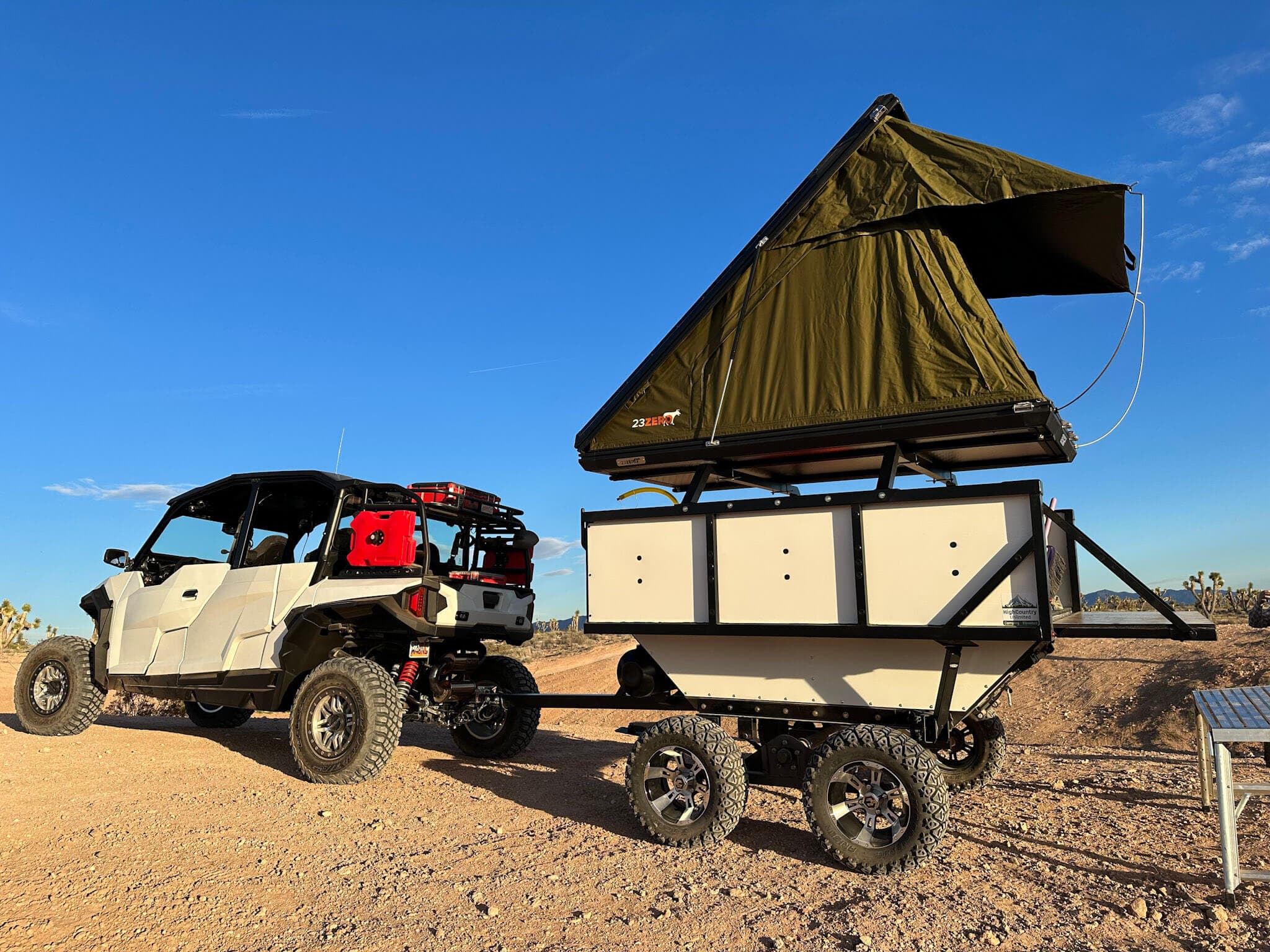
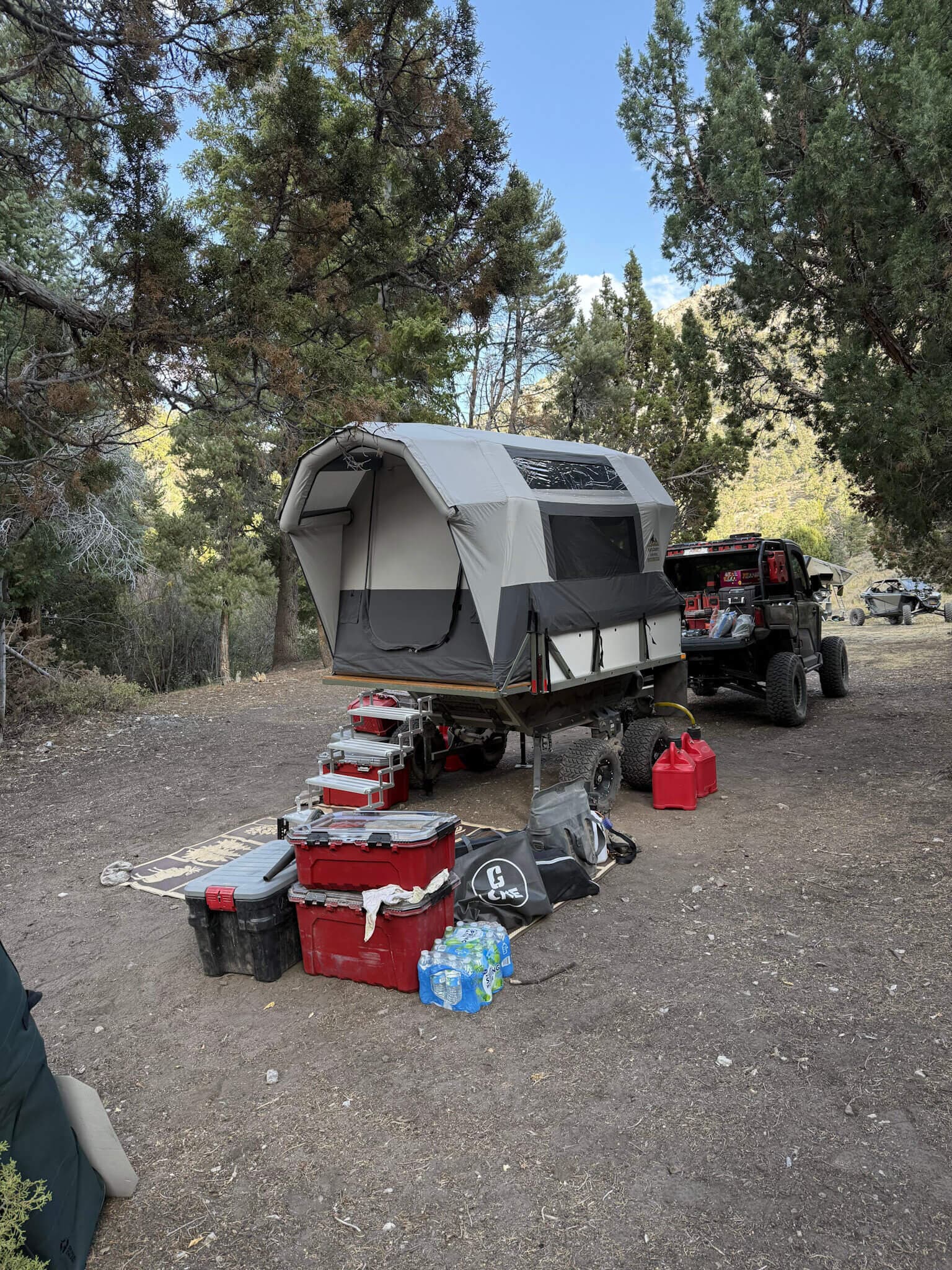
| HighCountry Unlimited Conestoga Rover | 900 lb base dry | $26,649, fully outfitted | Airframe Conestoga ground tent |
| Venture Overland X-Sport | from 900 lb | $9,400 | Rooftop-tent / gear platform |
| HighCountry Unlimited Mansion Rover | 920 lb base dry (before rooftop tent) | $26,649, fully outfitted | 23Zero rooftop tent |
A few near-misses worth knowing about: Hiker's Highway Deluxe hits 900 lb in the 5x9 size and 1,000 lb at 5x10, and Venture Overland's RT3 Gear platform starts at 800 lb but runs to 1,250 lb depending on build.
One note on how to read the HighCountry Unlimited rows, because options move the number. The 900 lb and 920 lb figures are base dry weights, the trailer as it leaves the shop in its standard configuration. Load it up with options like the diesel heater kit or the full bathroom and shower system and dry weight climbs toward 1,100 lb. Either way, the ceiling is the GVWR: 1,800 lb fully outfitted and packed for a trip. Every builder in this table publishes a base dry weight the same way, so compare like for like and check the GVWR before you match a trailer to your tow rating.
Here's the split that matters if your tow rig has a roll cage: of everything in the table above, only three builders put an ATV, UTV, or side-by-side towing claim in writing on their own product pages — HighCountry Unlimited (both Rovers are aimed at side-by-sides first, with a 76 to 78 inch track width depending on the tire setup, and walking-beam suspension built for trail speed), SNO Trailers (the Recon is pitched as light enough for ATV or side-by-side towing), and Sunnyside OffRoad (the Boony Stomper page says it tows behind any vehicle including a UTV).
Being under 1,000 lb doesn't automatically make a trailer UTV-ready — hitch height, track width, and suspension matter as much as mass. Our UTV towing guide walks through what to check before you hitch one to a side-by-side.
Because "base price" buys wildly different things in this class. It's the least honest number in the table unless you know what's behind it.
The right answer depends on what you're actually buying: a project, a platform, or a finished rig. If it's the last one, compare the two Rovers here.
The brands that dominate overland-trailer searches mostly don't qualify for this list, and it's worth saying so plainly since they get cross-shopped anyway. Escapod's TOPO2 starts at 1,650 lb and $33,990. Boreas' UB is 1,425 lb at $14,990. Bean's lightest trailer is 1,650 lb. TAXA's TigerMoth runs about 1,310 lb. Off Grid Trailers' Sprocket is 1,600 lb, built in Canada. Every one of these is a genuinely well-engineered camper, and the innovation coming out of this industry is a big part of why the category keeps getting better. They are simply built to a different brief: a hard-side shell in a heavier weight class, with the tow vehicle to match.
If your tow vehicle is a half-ton truck and weight is no object, that class is worth a serious look, and several of those builders do it very well. If your tow vehicle is a Subaru, a Tacoma, or a side-by-side, the table above is your actual market.
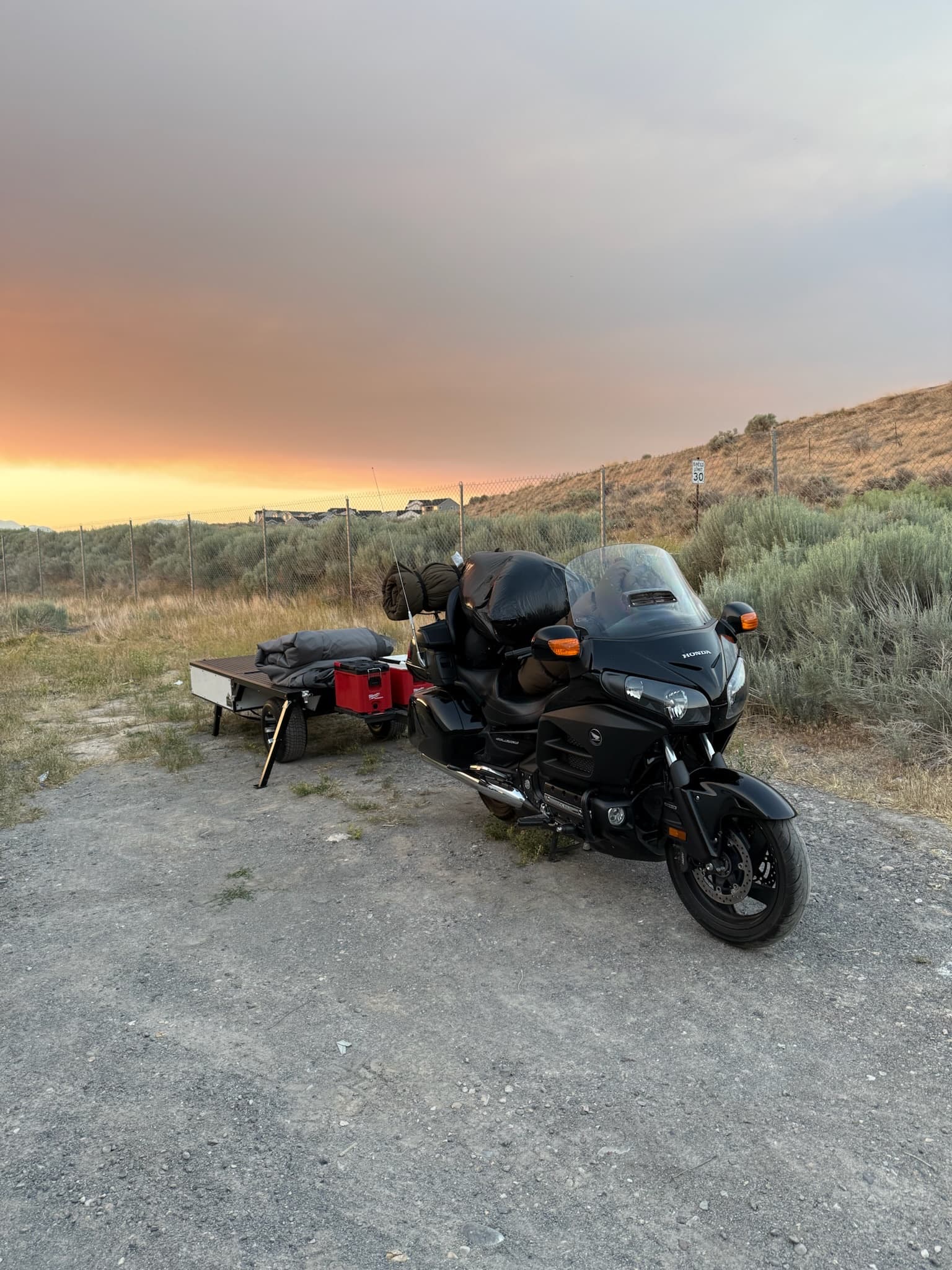
HighCountry Unlimited's Ultra Compact Conestoga is in final development at under 300 lb empty — light enough to tow behind a touring motorcycle, running as a flat cargo deck on the road and deploying an airframe Conestoga tent at camp. Final specs and pricing haven't been announced, but it will sit at the very bottom of this weight class when it arrives.
Related builds
Keep reading
Ready to build a trailer you can actually tow?