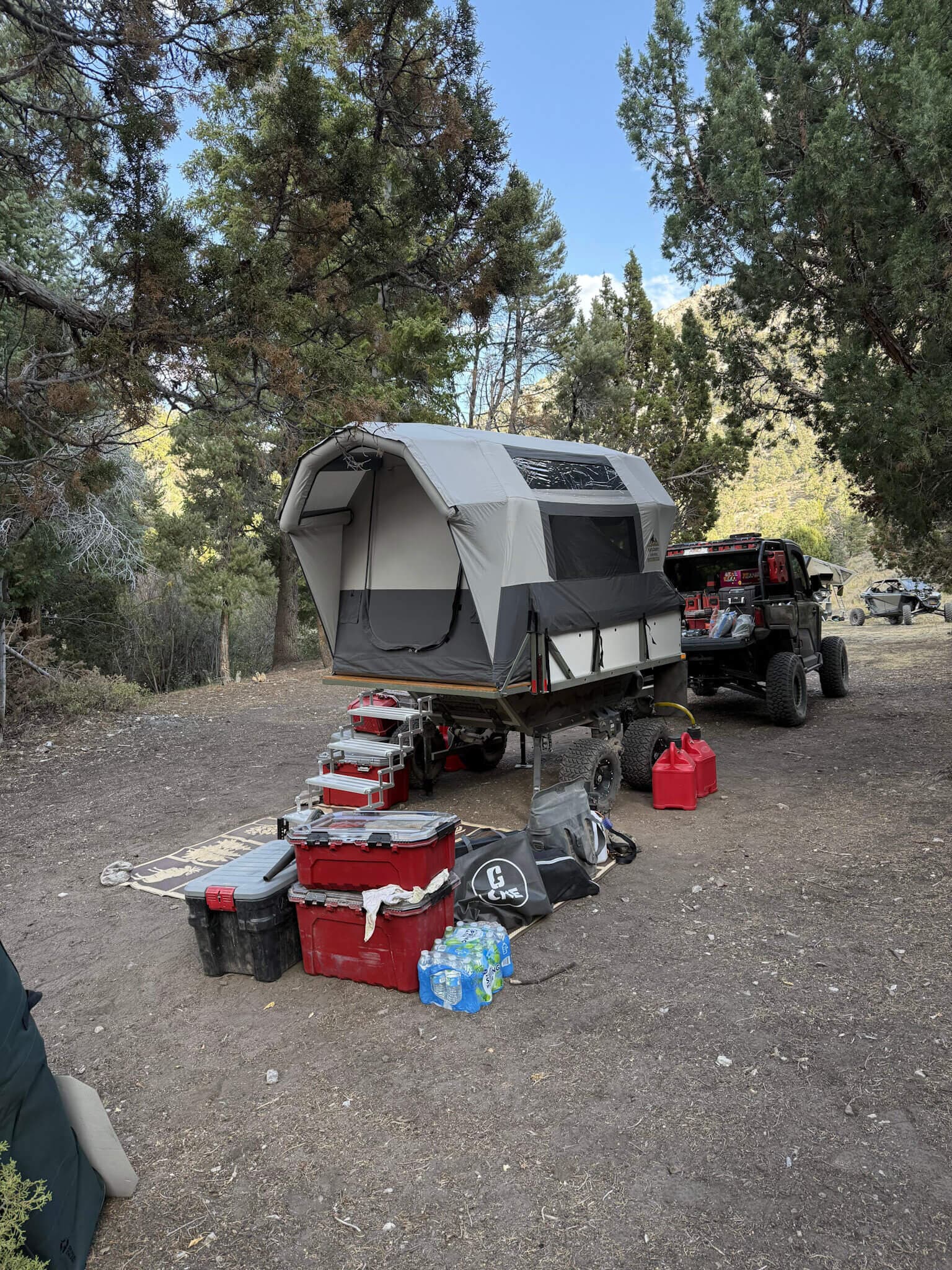
Camping trailers that tow behind a UTV, Subaru, or truck
Yes, a UTV can tow a real camping trailer. What it takes: dry weight, tongue weight, track width, and suspension built to survive the trail behind a side-by-side.

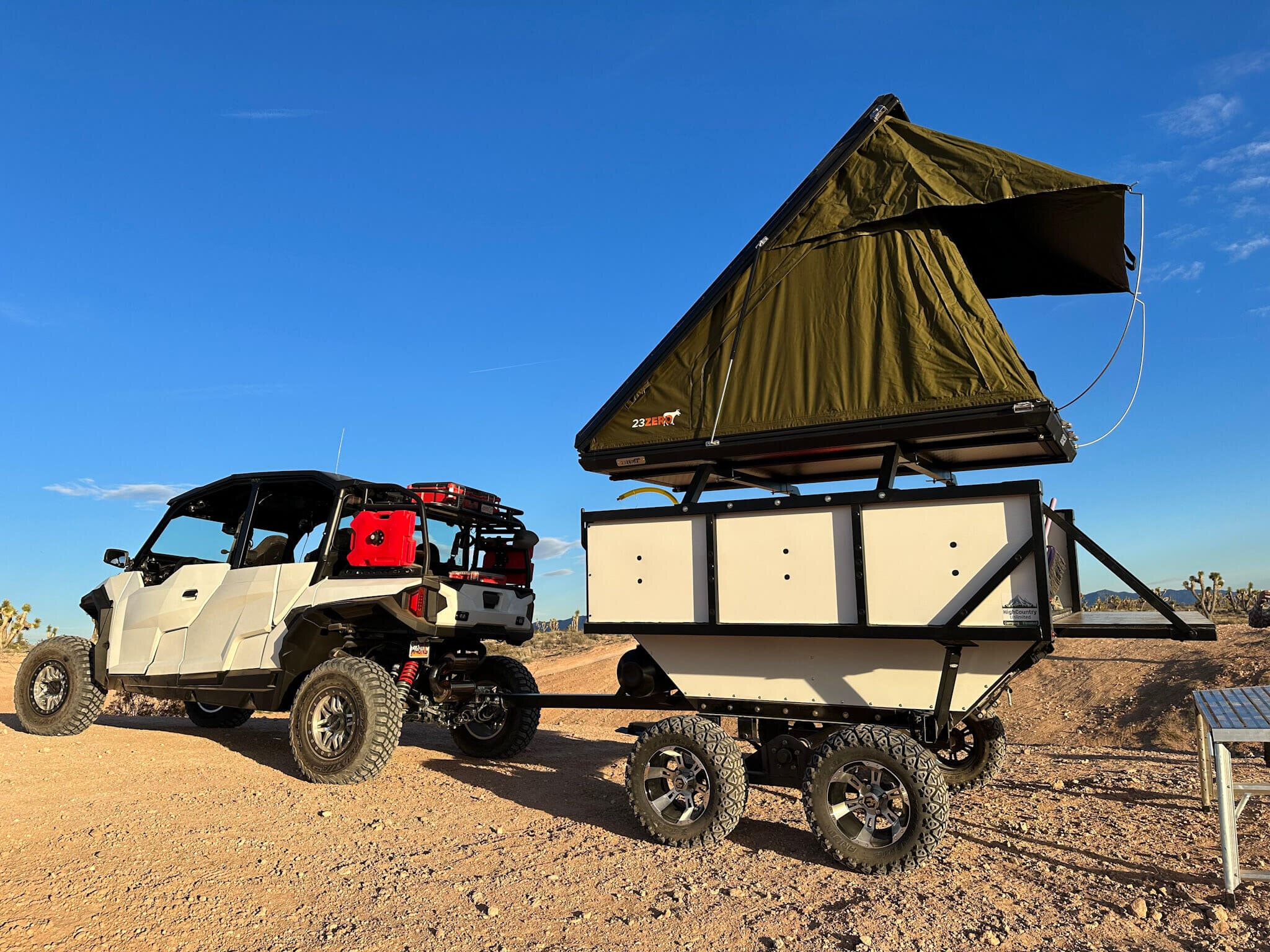
A full-size utility UTV typically tows 2,000 to 2,500 lb, and the extreme-duty Polaris RANGER XD 1500 goes to 3,500 lb, while lighter rec and sport machines range from about 1,500 lb down to no tow rating at all. The exact figure is set by the manufacturer, so the only number that counts is the one on your machine's published specs.
Below is a towing-capacity table verified against each manufacturer's own published specifications, plus how to read those numbers before you hitch up a trailer.
Towing capacity is not just about engine power. The manufacturer sets a single rated number based on the whole machine working together, and a few things drive it more than horsepower does.
Every number in this table was confirmed against the manufacturer's own published specifications, either the model's spec sheet or its owner's manual. Ratings can vary by model year and trim, so treat this as a starting point and confirm the figure for your exact machine.
| UTV model | Class | Towing capacity |
|---|---|---|
| Polaris RANGER XD 1500 | Extreme-duty utility | 3,500 lb |
| Polaris Ranger XP 1000 | Full-size utility | 2,500 lb |
| Can-Am Defender (HD7 / HD9 / HD10) | Full-size utility | 2,500 lb |
| Polaris General XP 1000 | Rec-utility | 2,000 lb |
| Yamaha Wolverine RMAX2 1000 | Rec-utility | 2,000 lb |
| Yamaha Wolverine X2 850 | Rec-utility | 2,000 lb |
| Can-Am Maverick Sport DPS | Sport | 1,500 lb |
| Can-Am Maverick Trail DPS | Sport | 1,500 lb |
| Polaris RZR XP 1000 | Sport | Not rated for towing |
| Can-Am Maverick X3 | Sport | Not rated for towing |
Two things stand out. The RANGER XD 1500 sits in a class of its own at 3,500 lb, with the full-size utility machines behind it at 2,500 lb, and the pure sport models tell on themselves: the Polaris RZR XP 1000 and the Can-Am Maverick X3 publish no towing capacity at all. The X3 lists only a rear tow hook. If towing a camper is the goal, a sport machine is the wrong starting point.
This list covers the models we could confirm directly against the manufacturer's own specs. If your machine is not here, look up its published towing capacity before you trust any third-party number.
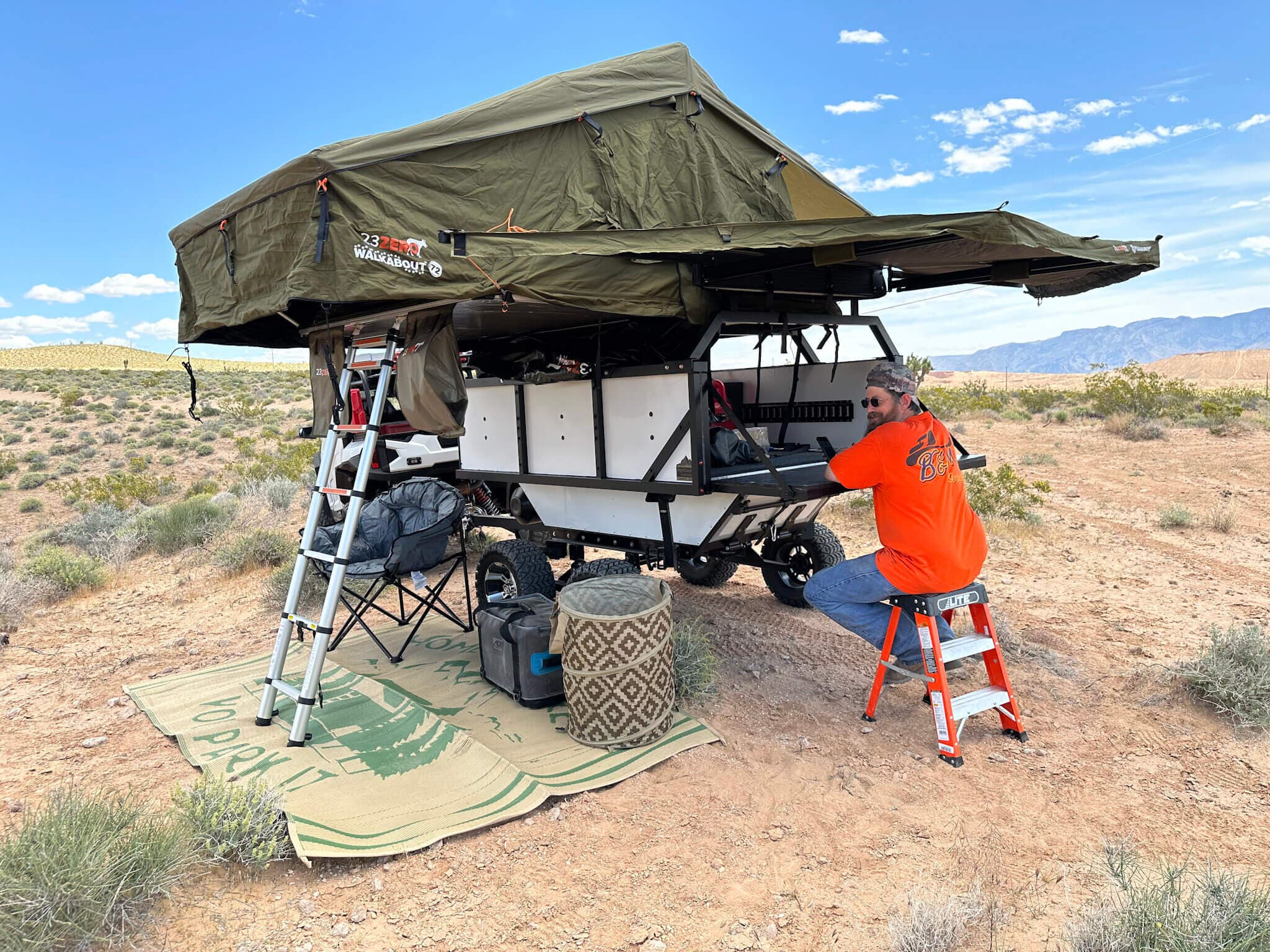
A rated towing capacity is a maximum measured under good conditions, not a target for a rough trail. Loose surfaces, steep grades, heat, and washboard all ask more of the machine, so the smart move is to run well under the number, not right at it.
Two guidelines keep you honest. First, judge the trailer by its loaded weight, capped by its GVWR, not its empty dry weight, because gear, water, and fuel add up fast. Second, keep tongue weight near ten percent of the loaded trailer and under your machine's hitch limit. A trailer that sits comfortably below both your tow rating and your tongue rating is one you can actually enjoy pulling on the trail instead of babying it.
Getting the numbers right is half the job. The other half is how you load and drive.
None of this is hard once the trailer is light and balanced to begin with. That is the whole point of towing weight instead of hauling it: the trailer follows you instead of fighting you.
Our HighCountry Unlimited trailers start at 900 lb empty, run to about 1,100 lb as optioned, and top out at 1,800 lb fully outfitted. That makes the answer easy for most of the machines above.
Any of the machines rated 2,000 lb or more tows one fully loaded with real margin: the Polaris RANGER XD 1500 at 3,500 lb, the Polaris Ranger XP 1000 and Can-Am Defender at 2,500 lb, and the Polaris General XP 1000, Yamaha Wolverine RMAX2 1000, and Wolverine X2 850 at 2,000 lb. Fully packed at 1,800 lb, you are still inside every one of those ratings, and on the XD 1500 you are using barely half of it.
The 1,500 lb machines, the Can-Am Maverick Sport and Trail, can pull the trailer but not at full load. At 900 lb empty you have room for a moderate camp kit, but you would have to keep total packed weight under 1,500 lb rather than loading all the way to the trailer's 1,800 lb ceiling. And the sport models with no tow rating, the RZR XP 1000 and Maverick X3, are not built for this.
The takeaway: pick a full-size utility or rec-utility machine and a light, purpose-built trailer, and you have a rig that camps deep in the backcountry. For how those trailers are built to survive the trail, see our guide to camping trailers you can tow with a UTV.
Related builds
Keep reading
Ready to build a trailer you can actually tow?
