Camping trailers that tow behind a UTV, Subaru, or truck
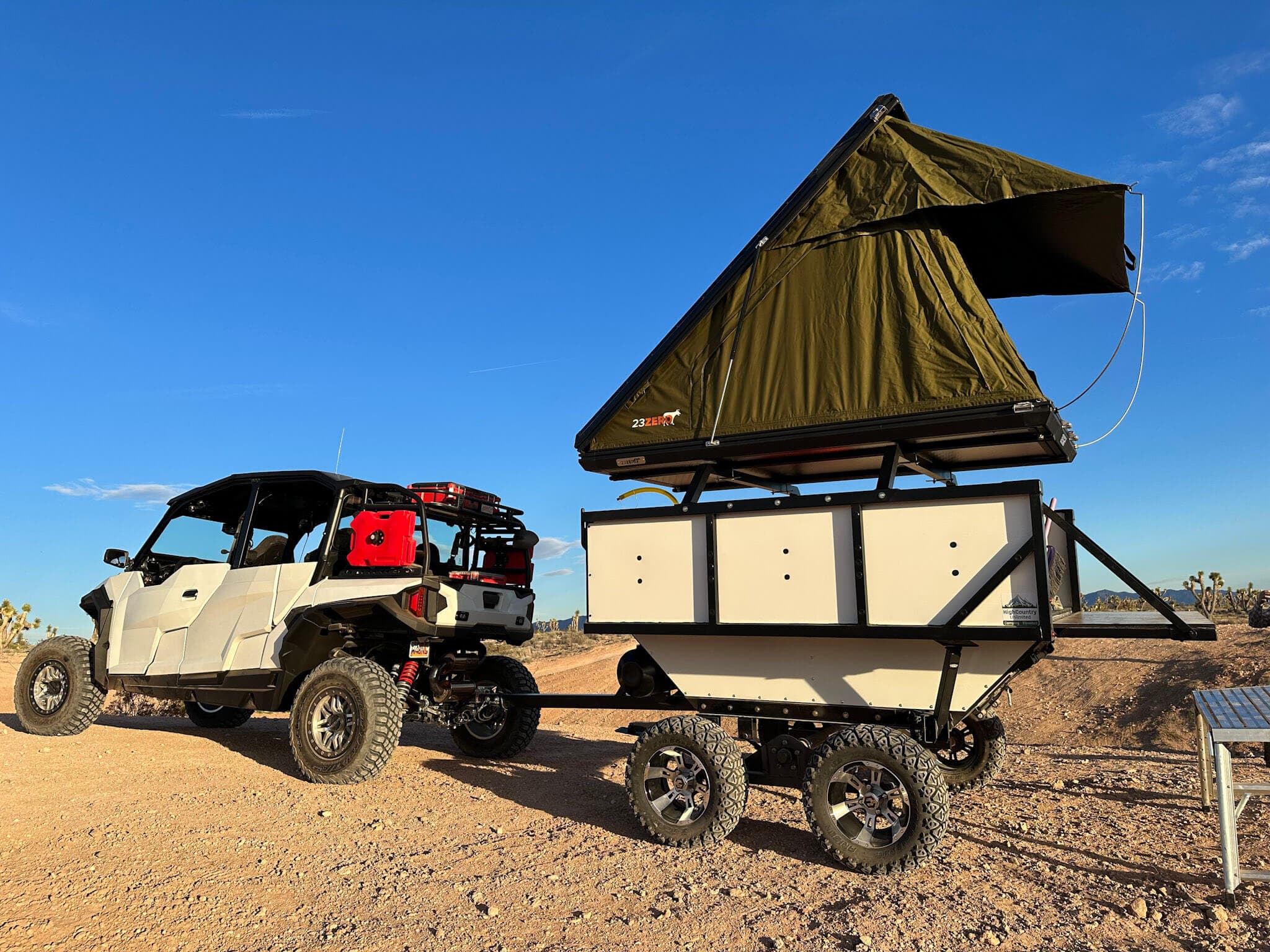
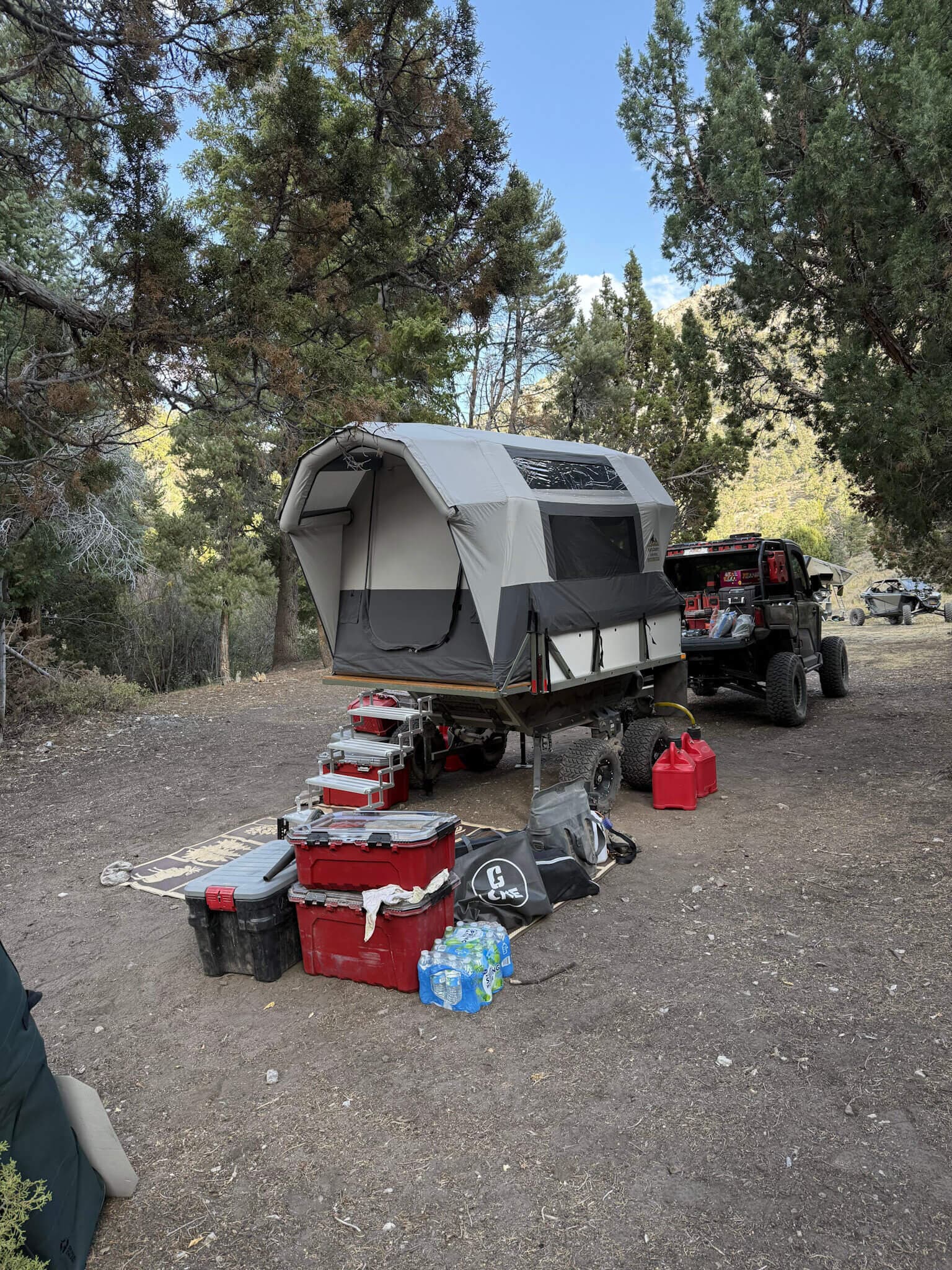
Yes, a UTV can tow a real camping trailer. What it takes: dry weight, tongue weight, track width, and suspension built to survive the trail behind a side-by-side.
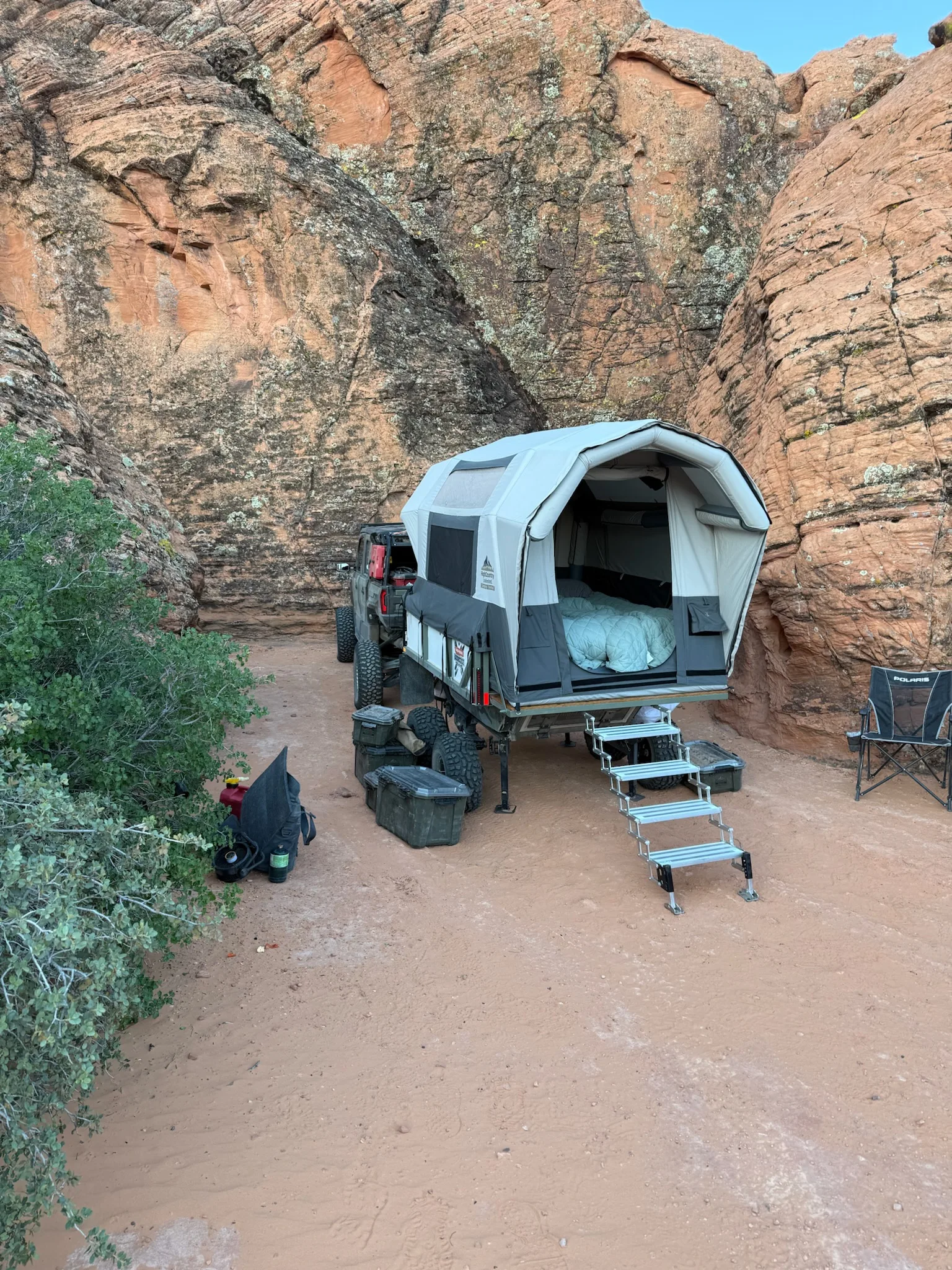
Yes, a Subaru Outback can tow a camping trailer. Subaru rates the Outback to tow up to 3,500 lb on its turbocharged XT and Wilderness trims, and 2,700 lb on the standard 2.5-liter trims. Both numbers cover a genuinely lightweight overland trailer, even fully loaded.
The trick is matching the trailer's real loaded weight to your Outback's rating, not its dry weight. Get that right and an Outback makes a capable little tow rig for off-grid camping.
Subaru publishes two towing ratings for the Outback, split by engine. The standard 2.5-liter non-turbo trims are rated at 2,700 lb, and the turbocharged 2.4-liter trims, which include the Limited XT, Touring XT, and the Outback Wilderness, are rated at 3,500 lb. That split has held through the redesigned current model.
| Outback trim | Engine | Max towing capacity |
|---|---|---|
| Standard trims (Premium, Limited, Touring) | 2.5L non-turbo | 2,700 lb |
| Limited XT, Touring XT | 2.4L turbo | 3,500 lb |
| Wilderness | 2.4L turbo | 3,500 lb |
Subaru pairs those ratings with maximum trailer tongue weights of 270 lb on the non-turbo trims and 350 lb on the turbo trims. Those tongue limits matter as much as the tow rating, and a light trailer stays well under both.
The most common towing mistake is shopping by a trailer's dry weight. Dry weight is the empty trailer off the lot. What your Outback actually pulls is the loaded weight: the trailer plus your tent gear, water, fuel, food, and everything else you pack. That loaded number is what has to stay under Subaru's rating.
A trailer's GVWR, or gross vehicle weight rating, is the ceiling on that loaded weight. Read it as the real number your tow vehicle has to handle, then leave margin. Staying comfortably below the rating, rather than right at it, keeps braking, handling, and the transmission happy on grades and in the heat.
Tongue weight is the last piece. Aim for roughly ten percent of the loaded trailer weight on the hitch, and confirm it lands under your trim's tongue-weight limit. Too little tongue weight and the trailer sways; too much and you overload the rear of the car.
For a light overland trailer, usually not, but two things are worth checking before you assume so.
First, your owner's manual. Towing guidance commonly lists a lower limit for trailers without their own brakes and a higher one for braked trailers, so confirm which applies to your trim before you load up. Second, your state's law, since many require trailer brakes above a set loaded weight, and that threshold varies from state to state.
A trailer that stays well under the rating gives you the most room either way. A fully loaded 1,800 lb build sits far below the base Outback's 2,700 lb number, so you keep plenty of margin. When you are unsure, add trailer brakes anyway. They shorten stops on grades and take heat off the car's own brakes on a long descent.
For a light trailer, yes. The Outback's standard symmetrical all-wheel drive helps put power down on loose gravel and dirt, and its ground clearance handles a maintained forest service road without drama. The Wilderness trim adds more clearance and a more aggressive setup if you spend serious time off pavement.
What matters just as much is the trailer behind it. A trailer built with real off-road suspension and a narrow footprint follows the car through ruts and washboard instead of fighting it. Our trailers ride on a suspended walking-beam suspension and measure between 76 and 78 inches wide, depending on the tire and wheel setup, so they track cleanly behind a wagon on a rough road rather than bouncing the back of the car around.
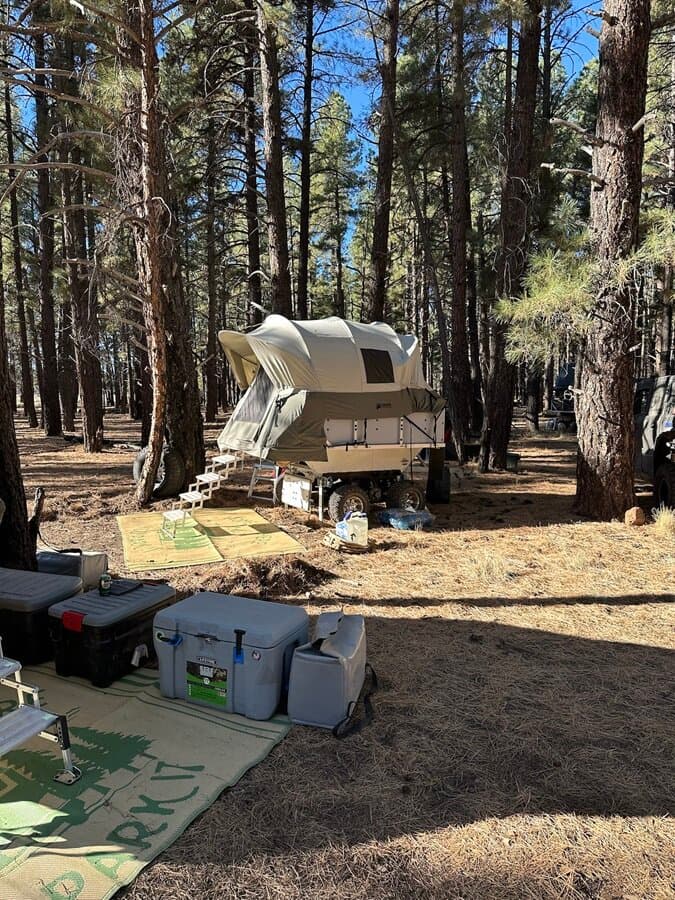
Right in the sweet spot. Our Conestoga Rover starts at 900 lb dry, runs to about 1,100 lb dry as optioned, and carries a GVWR of 1,800 lb, which is its maximum fully outfitted weight. That 1,800 lb ceiling sits well inside even the base Outback's 2,700 lb rating, with hundreds of pounds of margin to spare. On a turbo XT or Wilderness trim, you are barely using half the rated capacity.
Tongue weight tells the same story. Fully loaded, our trailers put roughly 100 lb on the hitch, far under Subaru's 270 lb non-turbo limit. So a Subaru Outback does not just technically tow one of our trailers, it tows it fully loaded with comfortable headroom on every number that matters.
Every trailer is hand-built to order in Mesquite, Nevada, starting at $26,649, and light enough to tow with far more than a Subaru. See which camping trailers a UTV can tow if you also want to run it on the trail behind a side-by-side.
The Outback is not the only Subaru people tow these trailers with, and the ratings differ enough between models that it is worth being precise.
The Crosstrek is the one to read carefully. Subaru rates every Crosstrek trim at 1,500 lb of towing with a 150 lb tongue limit, except the Crosstrek Wilderness, which jumps to 3,500 lb with a 350 lb tongue limit. That split matters here: a Crosstrek Wilderness tows one of our trailers fully outfitted at 1,800 lb with room to spare, while a standard Crosstrek is rated below that ceiling. On a standard trim you would need to keep the loaded trailer under 1,500 lb, which is workable for a light camp kit but not for a full load.
| Crosstrek trim | Max towing capacity | Max tongue weight |
|---|---|---|
| Base, Premium, Sport, Limited, Hybrid | 1,500 lb | 150 lb |
| Wilderness | 3,500 lb | 350 lb |
If you drive a Forester instead, the redesigned Forester Wilderness is rated by Subaru to tow up to 3,500 lb, thanks to an uprated transmission cooler. That is the same ceiling as the turbo Outback trims and far more than a light overland trailer needs. Towing ratings on other Forester trims are lower, so check the figure for your exact trim before you buy.
Related builds
Keep reading
Ready to build a trailer you can actually tow?