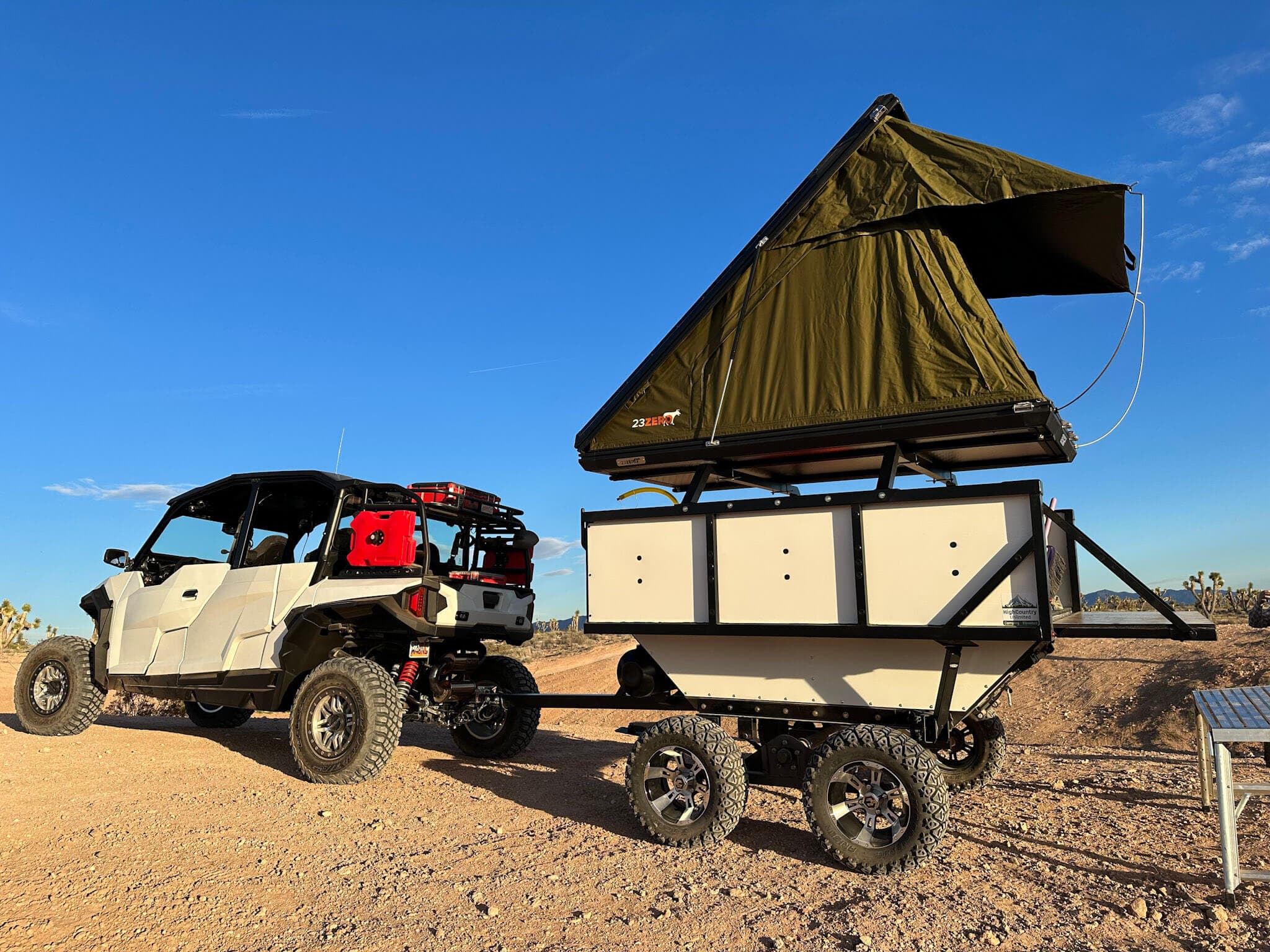
How much can a UTV tow?
UTV towing capacity runs 1,500 to 3,500 lb by model, and many sport models aren't rated to tow at all. A manufacturer-verified towing-capacity table by model.

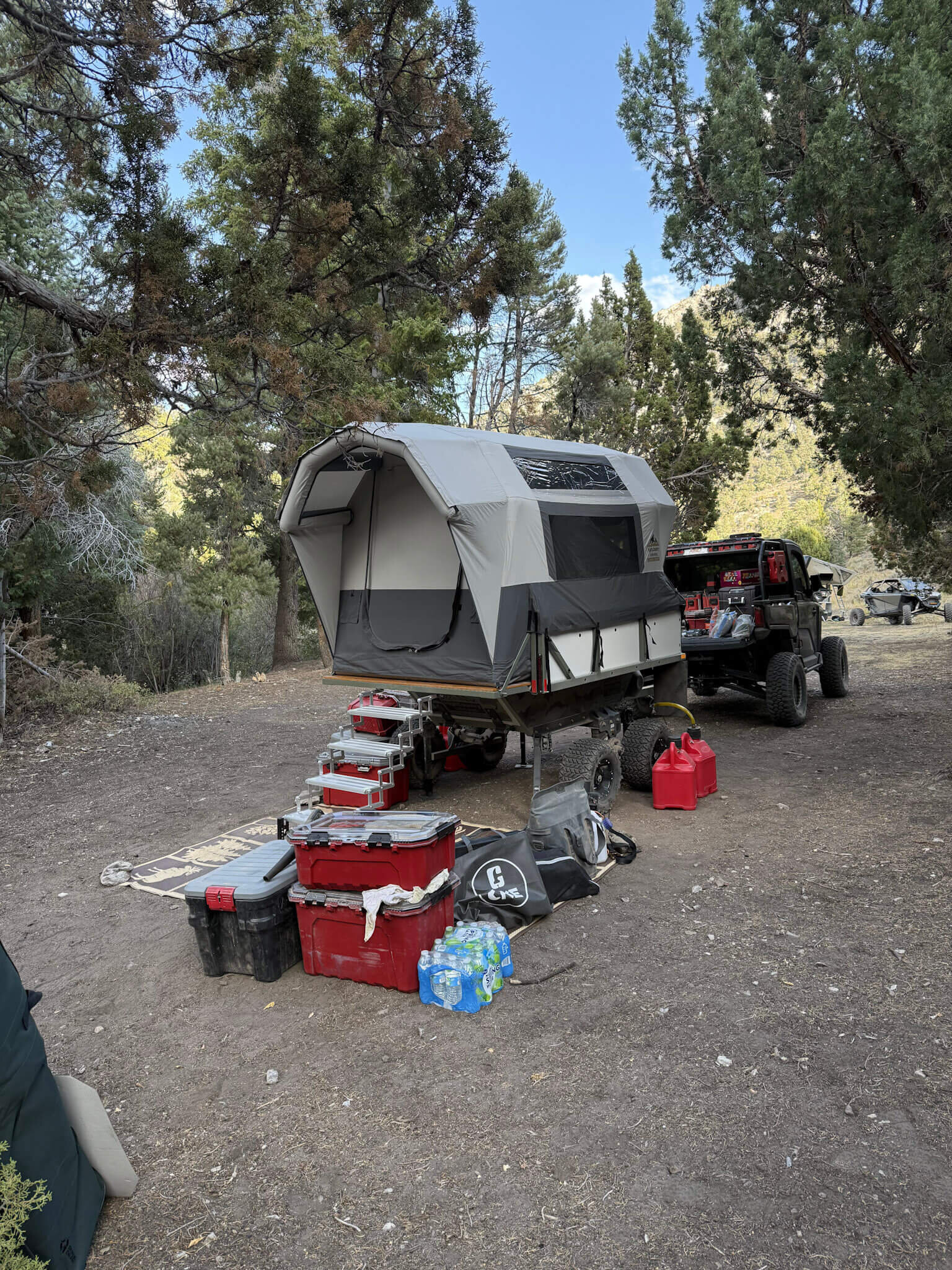
Yes, a full-size UTV can tow a camping trailer. The catch is that the trailer has to be built light enough and narrow enough to follow your machine down the trail, not just sit behind a truck on the highway.
Search for a "UTV camping trailer" and you mostly turn up haulers: flatbeds and toy-box trailers built to carry a side-by-side on a deck. This guide is about the opposite setup. A camper your side-by-side pulls behind it, out to the same backcountry spots you already ride to. That is exactly what we build HighCountry Unlimited trailers to do.
A modern full-size side-by-side is a work machine. Utility models ship with a rear receiver hitch and are engineered to pull loaded utility trailers, so pulling a purpose-built camper is well inside what the platform was designed for. The question is never really whether the UTV can move the weight. It is whether the trailer behind it was built to survive the same terrain the machine was.
That is the whole reason HighCountry Unlimited exists. Our first build was a modern-day chuck wagon put together for a UTV run out to the North Rim of the Grand Canyon, because there was no way to carry enough gas, water, and gear for more than a single day. The trailer solved it, and it kept evolving from there.
Exact towing capacity varies a lot from one machine to the next, and sport models are rated very differently from utility ones. We break it down model by model in our guide to how much a UTV can tow. The short version: most full-size utility side-by-sides are rated to pull well over a half-ton, which is far more than a light overland camper weighs.
Weight is the number that matters most, and it comes in two forms that people mix up constantly: dry weight and loaded weight.
That 900 to 1,100 lb dry, 1,800 lb fully outfitted window is the sweet spot for a side-by-side. It leaves you real cargo capacity for a full camp without ever getting close to the pulling limits of a full-size utility machine. Just as important, tongue weight stays low. A good rule of thumb is to keep tongue weight around ten percent of the loaded trailer, and a light, balanced tongue matters even more on a UTV than on a truck, because the machine's rear axle and suspension are carrying that downward load on rough ground.
The trap to avoid is a trailer that is light on paper but has no reserve. If a camper is rated to carry almost nothing over its own dry weight, you overload it the moment you pack for a real trip. Build weight and carrying capacity both have to be there.
Pavement forgives a lot. Washboard, ledges, and ruts do not. A trailer that tows fine on the highway can shake itself apart on a forest service road if it was not built for it. Three things decide whether a camper holds up behind a UTV.
Suspension comes first. Our trailers ride on an Independent Suspended Walking Beam setup, which lets each side articulate over obstacles instead of slamming the whole frame every time one wheel drops into a rut. That is what keeps the trailer, and everything packed in it, from taking the full hit of the trail.
Footprint comes second. We build 12 feet long and between 76 and 78 inches wide, depending on the tire and wheel setup you order. That keeps the trailer narrow enough to follow you down a trail instead of hanging out into the rocks and brush on either side of it.
The frame ties it together. A full aluminum frame keeps curb weight low without giving up strength, so the trailer stays light enough for a UTV to pull comfortably and rigid enough to take repeated impacts. Light frame, real suspension, sane width. Miss any one of the three and the trail finds out.
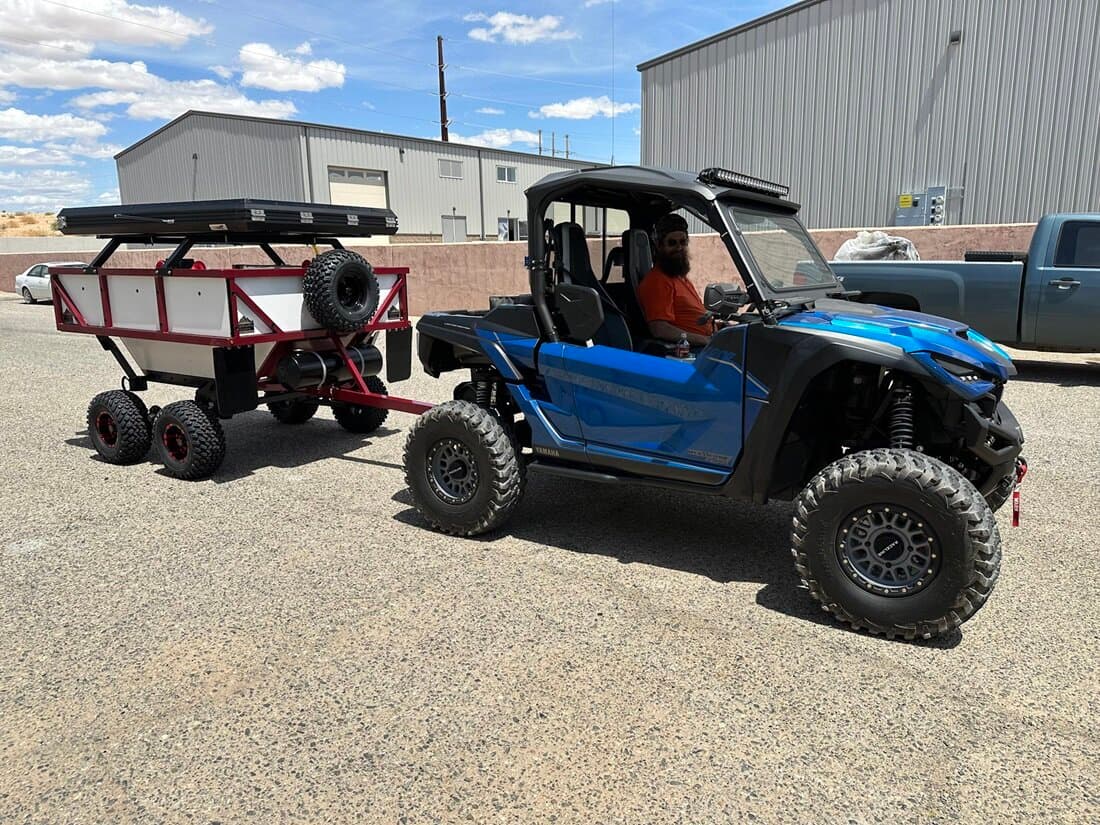
If you are shopping for a camper to tow behind a side-by-side, a short checklist separates the trailers built for it from the ones that only look the part.
Every HighCountry Unlimited trailer is built to that list from the first weld. It is why the same trailer works behind a UTV on the trail and a daily driver on the highway, without compromise on either end.
This is where a well-built UTV camper earns its keep. Because it is built light and narrow for the trail, it is also easy to tow with almost anything you own. The same trailer that follows your side-by-side to a backcountry site tows behind a mid-size SUV, a compact truck like a Tacoma, or a daily-driver wagon on the drive out.
A 1,800 lb loaded ceiling sits well inside the tow rating of a lot of crossovers and wagons. If you drive one, see exactly where it lands in our breakdown of whether a Subaru Outback can tow a camping trailer.
That is the whole design goal at HighCountry Unlimited: tow with what you already drive. Every trailer is hand-built to order in Mesquite, Nevada, starting at $26,649, and it ships fully outfitted so the trail machine and the tow rig both stay unloaded. You bring your own cooler, food, and drinks. Bedding can live in the trailer between trips, so the rest of camp is already packed.
Related builds
Keep reading
Ready to build a trailer you can actually tow?
