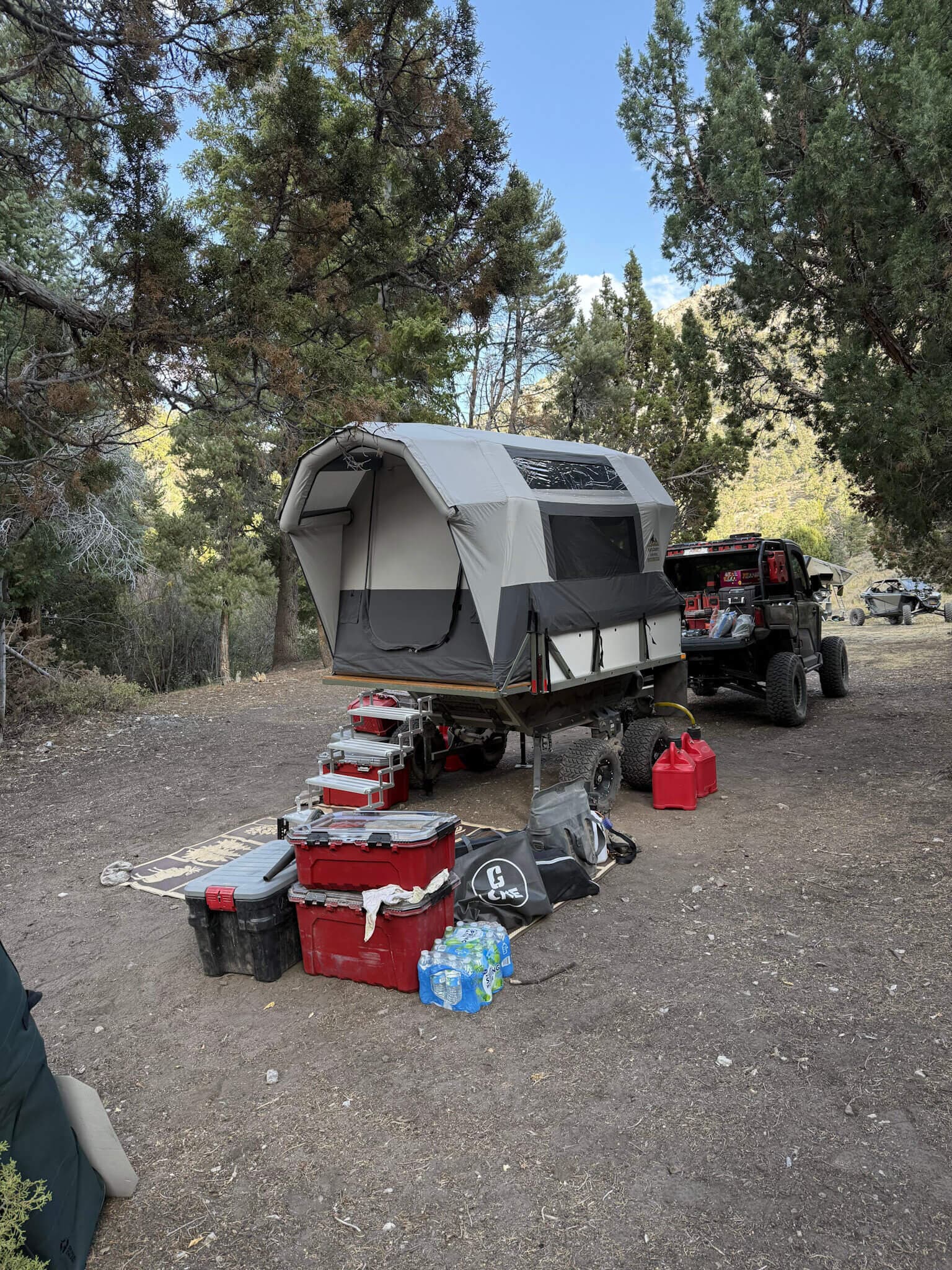
Camping trailers that tow behind a UTV, Subaru, or truck
Yes, a UTV can tow a real camping trailer. What it takes: dry weight, tongue weight, track width, and suspension built to survive the trail behind a side-by-side.

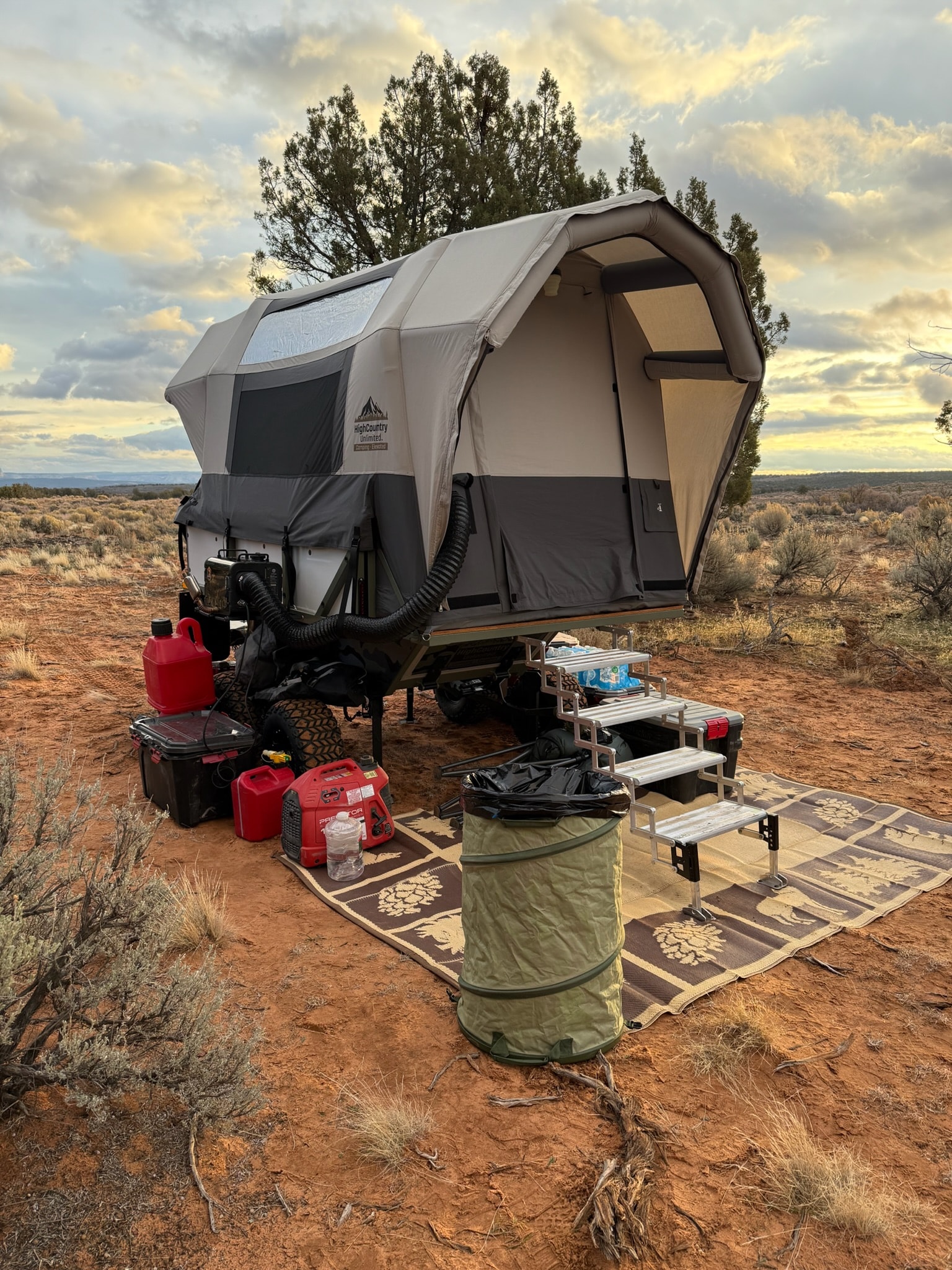
A Conestoga camper is a lightweight overland camping trailer topped with an airframe tent that arches overhead like the canvas cover on a historic Conestoga wagon. Also called a covered wagon camper, it packs down low for towing and deploys into a full standing-height shelter at camp.
The name has been getting more attention lately as overlanders look for camp setups that are roomier than a teardrop but far lighter than a hard-sided travel trailer. Here is what a Conestoga camper actually is, where the name comes from, and what one costs.
A Conestoga camper pairs a small, rugged trailer chassis with a soft tent whose roof curves up and over in a single arch. When you are towing, the tent is folded down and the trailer rides low and out of the wind. When you make camp, the fabric deploys over its frame into an enclosed room you can stand up and move around in. The covered-wagon shape is not just a nod to history. The arch is what gives the camper its headroom and its light weight at the same time.
Our Conestoga Rover is a modern take on the idea. It rides on a full aluminum frame with a suspended walking-beam suspension, starts at 900 lb dry and runs to about 1,100 lb dry as optioned, and deploys a custom-designed airframe tent instead of a rigid shell. Because it is light and narrow, it tows behind a UTV on the trail or behind a Subaru, mid-size SUV, or compact truck on the way there. Every one ships fully outfitted, so the trailer arrives ready to camp rather than as a shell you have to kit out yourself.
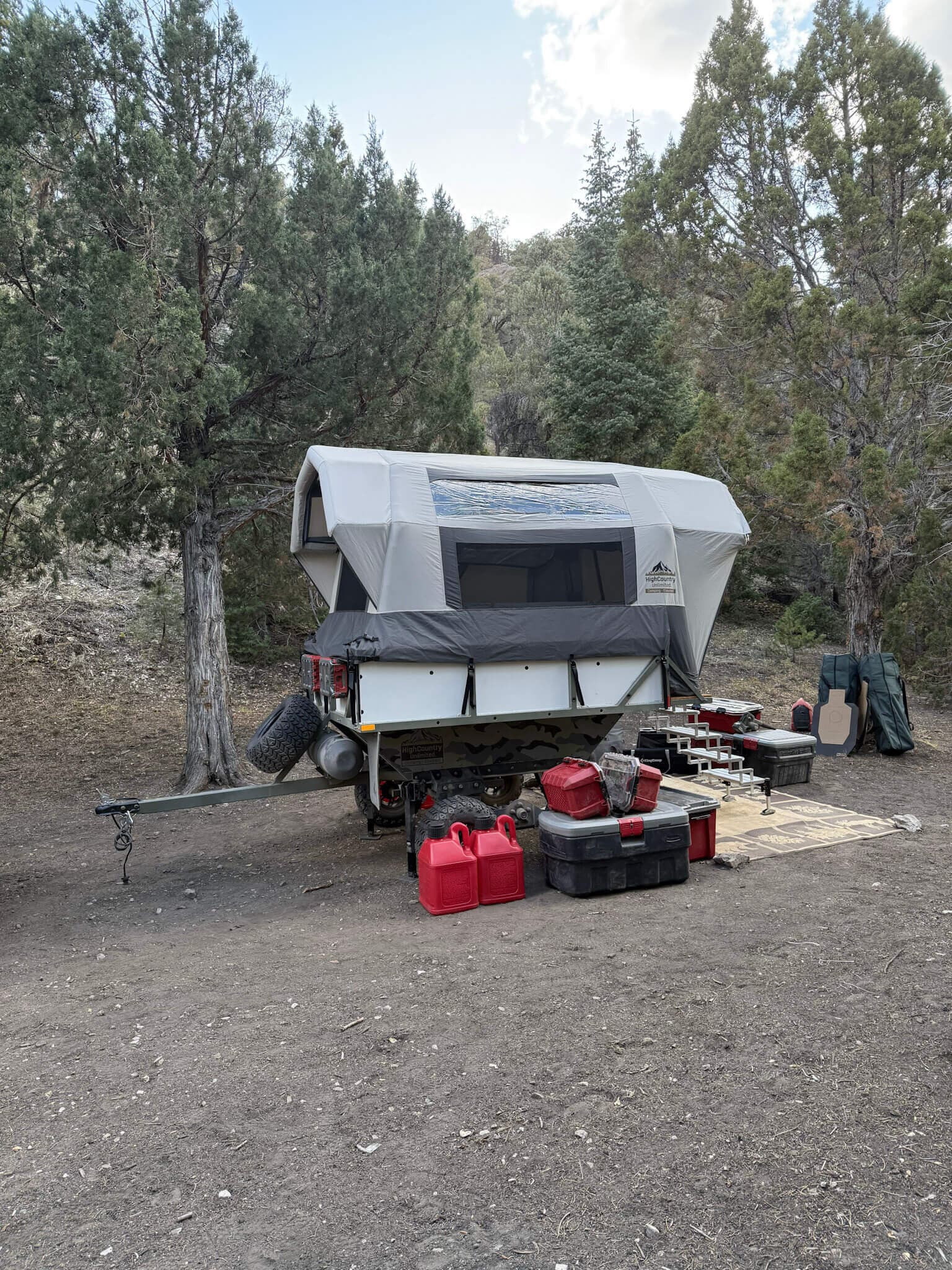
The name traces back to the Conestoga wagon, the heavy freight wagon that hauled cargo across the eastern United States in the 1700s and 1800s. It took its name from the Conestoga River region of Pennsylvania, where the design took shape. Its signature feature was a white canvas bonnet stretched over a row of curved wooden bows, giving the whole wagon that unmistakable arched roofline.
A modern covered wagon camper borrows that exact silhouette. Swap the wooden bows for a lightweight frame and the canvas for a modern tent fabric, and the arched profile does the same job it always did: it sheds weather, adds standing room, and keeps the structure light. The look is heritage. The engineering underneath it is not.
Search "Conestoga" and you will run into two completely different products, so it is worth clearing up.
One is a commercial freight trailer. In trucking, a Conestoga is a flatbed or drop-deck semi trailer fitted with a rolling tarp system that slides back and forth over a series of hoops, like an accordion, to cover or expose the load. It gets the name from the same wagon-bonnet look, but it is a piece of heavy-haul cargo equipment pulled by a semi truck. It has nothing to do with camping.
The other is what this page is about: a Conestoga camper, or covered wagon camper. That is a small, towable overland shelter built for sleeping in the backcountry, not for moving freight. Same historic shape, opposite purpose. If you are shopping for a camp setup, the camper is the one you want.
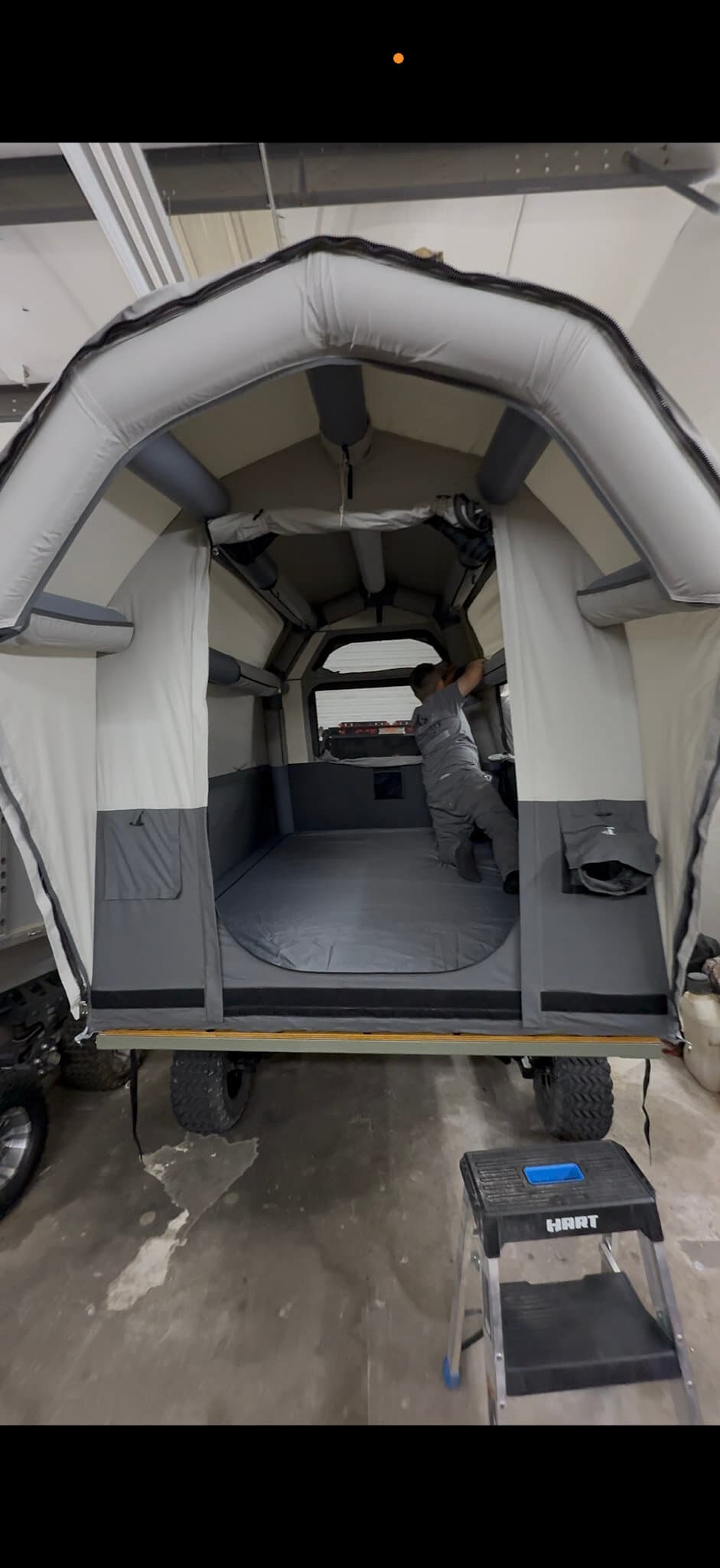
Roomier than most people expect. The arched tent gives you standing height down the center and enough floor to move around, get dressed, and ride out weather without being folded into a corner. It is a real improvement over a teardrop, where you are usually lying down the moment you climb in.
On our Conestoga Rover the tent deploys with a comfort air mattress and the pumps to set it up fast, and the trailer comes with the camp gear you would otherwise be buying piece by piece: a bed mat, fuel jugs, a cargo attachment system, hand tools, a step bench, and more. Options like a diesel-fired heater kit and a complete shower and bathroom system turn it into a genuine basecamp for cold or long trips.
Most overland sleep setups fall into three camps, and the covered wagon camper sits right between them.
A teardrop is hard-sided and secure, but the cabin is small and you are usually lying down the moment you are inside. A rooftop tent gets you off the ground fast and packs away clean, but you sleep up a ladder and the floor space is fixed by the tent's footprint. A covered wagon camper trades a bit of the teardrop's hard shell for something neither of the others gives you: a tall, open room you can stand in, move around in, and wait out weather in, on a trailer that still tows light.
Which one is right comes down to how you camp. If you want a quick perch on the roof, a rooftop build makes sense. If you want a real room at camp without stepping up to a heavy hard-sided travel trailer, the covered wagon shape is tough to beat, and that is a big part of why the design keeps coming back.
An annex is what closes the gap on a rooftop build. It hangs off the trailer and drops down to the ground as a tall, fully enclosed room with standing height throughout, so you get a place to change, cook, and sit out a storm instead of climbing straight up a ladder into the tent. On a bad-weather trip that room is the difference between waiting it out comfortably and waiting it out in a sleeping bag.
The HighCountry Unlimited Conestoga Rover starts at $26,649, and that price already includes the tent, mattress, pumps, and the rest of the camp kit. Add-ons like the heater or shower system, a custom powder coat, or a vinyl wrap raise the total, and every trailer is hand-built to order in Mesquite, Nevada, so the final number reflects the exact spec you choose.
You may see older or different figures quoted in press coverage of the build. Outlets like New Atlas and Trend Hunter have featured the covered wagon camper. Pricing in earlier articles can be out of date. The current starting price above is the authoritative one.
Related builds
Keep reading
Ready to build a trailer you can actually tow?
